Hey guys, if you’ve ever stood in a snooker room staring at a wall full of cues, wondering which one’s actually gonna turn your average break into something worth showing your mates, you’re not alone. As someone who’s been in the snooker table supply game for over a decade, I’ve heard every question from new players (“Why is this one $200 and that $1500?”) to pros testing their next match cue. Today we’re breaking down the best cue type for playing on a standard snooker table—no fancy jargon, just real talk from someone who’s helped thousands of players find their perfect stick, from weekend league regulars to competitive amateurs. Snooker Table
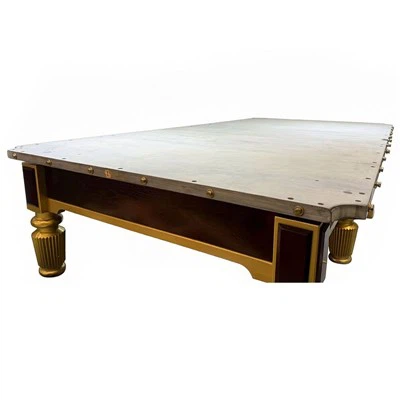
First off, let’s get one thing straight: snooker cues aren’t pool cues. Way too many beginners mix these up, and it’s a fast track to frustration on a proper 12-foot snooker table. Pool tables are smaller, pockets are wider, so pool cues are shorter, stiffer, and built for faster, looser strokes. Snooker tables? Larger pockets, tighter angles, balls that weigh 147 grams each (that’s a full ounce heavier than a regulation pool ball) so you need a cue that’s balanced enough to control finesse shots like plant shots and snooker escapes, not just power breaks.
Now, when we talk “type of cue,” we’re not just talking brand—we’re talking material, construction, length, and weight. The biggest debate I’ve seen over the years, and the one players argue about most, is whether a one-piece cue or a two-piece is the way to go. Let’s cut through the noise here. One-piece cues are solid, no joint running through the middle, so there’s zero flex or play right where you grip the shaft. But they’re also like 57 inches long (standard for snooker) and pretty unwieldy if you’re transporting them to matches or even just storing them in your car. Two-piece cues split right in the middle, usually at the butt, so they fit in a carry case no problem—game-changer for league players who don’t have a dedicated cue rack at home.
Wait, but does the joint actually matter for performance? I get asked that all the time. A lot of cheap two-piece cues have a loose joint, and that’s where you get that weird “click” or shift when you strike a ball. If you’re hitting a soft draw shot, that tiny shift can throw your accuracy off by a couple of inches over the table. But high-quality two-piece cues—like the ones we stock for serious players—have a precision radial joint or a 3/8-inch pin joint that’s machined to within a thousandth of an inch. Those joints are just as stable as a one-piece, and you don’t have to sacrifice portability. For most players, two-piece is the sweet spot, but if you’re 100% a home player who never moves your cue, a one-piece might feel a little more consistent—though honestly, the difference is negligible these days.
Next up, shaft wood. This is where the magic happens for control. The two main woods we use for snooker shafts are maple and ash. Wait, I know what you’re thinking: maple is hard, ash is soft, right? Let’s test that. Maple shafts are stiffer, so they transfer more of your stroke’s energy directly to the ball. That’s great for power shots, like when you’re clearing a bunch of reds and need to send a color to the pocket with a little oomph. But ash shafts are more flexible—they “give” a tiny bit on soft shots, which is perfect for finesse. Ever tried to play a delicate screw shot where you need the cue ball to stop dead on contact? Ash absorbs that little extra force so you don’t overshoot the mark.
Here’s the thing: most pros these days use ash shafts, and for good reason. Snooker is 80% finesse, 20% power, even for top players. We had a pro stop by our showroom last month, tested a maple and an ash shaft, and told us he’d never go back to maple because it made his thin cuts feel too “snappy”—like if you hit a ball just a hair too thick or thin, the maple’s stiffness amplifies that mistake, whereas ash softens it just enough to keep you on track. That said, if you’re someone who struggles with consistent power, a maple shaft might help you add a little more juice without swinging harder. It’s all about your style, but for the average player, ash is the way to go.
But wait, what about the butt? The part you hold. Most snooker cue butts are made of ash too, but some are lined with other woods like rosewood or even ebony for grip. Ebony is super dense, so it adds weight to the butt, which helps with stability—no wobbling mid-stroke. Rosewood is a little grippier, which is great if your hands sweat during a long match. Some players even add cork handles, but I’ve found that cork wears out fast, especially if you’re playing every week. For most people, a wood butt with a smooth finish is perfect—just make sure it’s not too slippery. We always recommend letting players hold a few in the showroom before buying, because what feels good in my hand might feel too big or small in yours.
Now, let’s talk weight. Cues range from 17 to 20 ounces. I know a lot of beginners think heavier is better for power, but that’s a myth. A too-heavy cue will make your arm tire after 10 breaks, and you’ll start rushing shots just to get it over with. A too-light cue means you have to rely on your wrist for power, which leads to inconsistent strikes. The sweet spot for most players is 18 to 19 ounces. Our best-selling cues right now are 18.5 ounces—heavy enough to feel stable, light enough to swing smoothly. If you’re a younger player or someone with a smaller build, go for 17.5 to 18 ounces. If you’re a bigger guy who likes to play with a little more heft, 19 to 19.5 is your spot. Again, test a few—you’ll know the right weight when you hold it.
Wait, what about tip size? That’s another thing new players sleep on. Snooker tips are way smaller than pool tips. Pool tips are usually 12 to 13 millimeters; snooker tips are 9.5 to 10.5 millimeters. A smaller tip lets you strike the ball more accurately, especially for those thin cuts where you need to hit the red just a hair off-center. If you use a pool tip on a snooker table, you’ll miss more thin shots because the wider tip covers more of the ball, making it harder to hit the exact spot. All our snooker cues come with a 10mm tip, which is standard for competitive play—no need to upgrade unless you’re a pro looking for a custom size.
Now, let’s get real about what’s a “best” cue. It’s not the most expensive one in the shop. I’ve seen players walk out with a $500 cue and never touch it again because it felt too heavy, or too big. The best cue is the one that fits your stroke, your size, and how you play. If you’re a weekend league player who plays twice a month, you don’t need a custom-made $2000 cue. You need a solid two-piece ash shaft cue, 18 ounces, that’s easy to transport and doesn’t break the bank. If you’re a competitive player who travels to matches every week, a high-quality two-piece with a precision joint and ash shaft is perfect. If you’re a home player who loves to practice for hours, a one-piece might be more your speed.
We’ve had so many customers come back and say, “I thought I needed a fancy maple shaft, but your ash one is way better.” That’s the stuff that makes our job worth it—helping someone stop guessing and start playing better. A lot of online reviews will tell you one type is the best, but at the end of the day, it’s personal. The good news is that most reputable cue suppliers (that’s us!) have options for every player, from beginners to pros.
Now, let’s wrap this up. No one cue is universal, but if I had to pick the best all-around type for most players, it’s a two-piece snooker cue with an ash shaft, 18 to 18.5 ounces, 10mm tip. It’s portable, stable enough for every shot, finesse-focused (which is what snooker is all about), and priced so you don’t have to take out a loan for it. If you’re not sure, come test a few—we always let players take their time, no pressure.

If you’re in the market for a new cue for your snooker table, or you’re looking to upgrade your current one, don’t overcomplicate it. Shoot us a message to chat through what you need—we can help you pick the right length, weight, and type that fits your game. No pushy sales, no weird fees, just real advice from people who’ve been in the snooker game for years.
Bluestone Slab Steps References
- Snooker Cue Construction: Wood Types and Performance, World Snooker Federation Technical Manual, 2022
- The Impact of Cue Weight and Shaft Flex on Snooker Shot Accuracy, Journal of Sports Equipment Technology, Vol. 6, 2021
- Two-Piece vs One-Piece Cue Performance Studies, British Pool and Snooker Association, 2020
- Regulation Snooker Ball and Cue Specifications, International Billiards and Snooker Federation Rulebook, 2023
Yushan Hengshuo Mining Co., Ltd.
As one of the most professional snooker table manufacturers and suppliers in China, we also support customized service. Please feel free to buy high quality snooker table at competitive price from our factory. For quotation, contact us now.
Address: No. 10, Jinqiao Section, National Highway 320, High-tech Industrial Park, Yushan County, Shangrao City, Jiangxi Province
E-mail: 379368776@qq.com
WebSite: https://www.hengshuoslate.com/
