If you’ve ever walked into a commercial office building, a storage unit facility, or even a small retail shop and noticed a round, key-operated lock with pins arranged in a circular pattern—chances are you’ve used a tubular lock, even if you didn’t know its name. As a tubular lock supplier who’s worked with this hardware for over a decade, I get asked one question more than any other: “Can tubular locks actually be used on doors?” The short answer is a resounding yes—but the longer, more nuanced explanation is what’s worth exploring, because the right type of tubular lock can solve specific problems that other lock designs struggle with, while also addressing common misconceptions about security, durability, and suitability for different door types. Tubular Lock
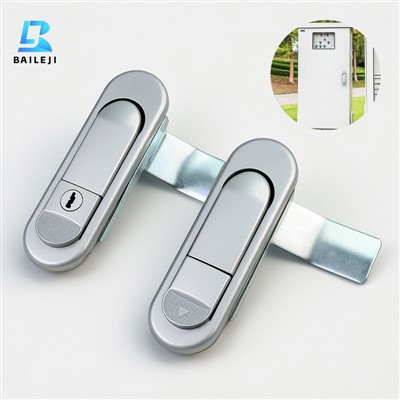
Let’s start with what makes tubular locks unique, because that core design is the foundation of their versatility. Unlike traditional pin tumbler locks, which have flat keys with pins arranged in a straight line, tubular locks (sometimes called radial locks or barrel locks) use a round key that’s inserted into a cylindrical housing, with small pins arranged in concentric circles inside the lock cylinder. This design dates back to the early 19th century, but it’s been refined for modern use, and that evolution is why it works so well for a wide range of door applications. When I first started in this industry, I’ll admit I underestimated tubular locks—their simple, unassuming look made them feel like a secondary choice compared to heavy-duty deadbolts. But after working with hundreds of clients across residential, commercial, and industrial spaces, I’ve learned their strengths come from that understated design.
First, let’s break down their use case for residential doors, because that’s where many people first encounter tubular locks. You won’t see high-security tubular deadbolts on every residential front door, but you’ll find them on interior doors that need basic security—like bedroom closets, bathroom pantries, home office cabinets, or utility room doors. Here, tubular locks outperform many other options because they’re easy to install, low-cost, and resistant to a common type of lock picking that targets straight-pin tumbler locks. Wait, you might be thinking—aren’t tubular locks easier to pick? That’s a myth I hear all the time, and it’s one I’ve worked to correct for years. While entry-level tubular locks designed for low-security applications can be vulnerable to basic picking, high-grade tubular locks with anti-pick pins, hardened steel cylinders, and restricted keyways are far more resistant to standard lock picking tools than many mid-tier pin tumbler locks. For residential use, where the goal is to keep curious kids out of a linen closet or prevent unauthorized access to a home office storage space, a quality tubular lock is more than sufficient. It’s also lightweight, which makes it ideal for thin interior doors where a heavy deadbolt would be overkill or damaging.
But the real sweet spot for tubular locks is commercial and light industrial doors, and that’s where most of my work as a supplier happens. Commercial spaces have unique lock requirements: high traffic, varying user access needs, durability, and compatibility with master key systems. Tubular locks check all these boxes. Let’s take office building entry doors, for example. Many small to mid-sized offices use tubular locksets on their ground-floor interior doors, like conference room doors, server room access panels, and storage closets. Why? Because their cylindrical design fits snugly into standard door prep—most commercial doors are pre-drilled for both straight-pin and tubular locksets, so there’s no extra modification needed. That’s a huge benefit for facilities managers who need to swap out locks quickly or rekey multiple doors after a tenant turnover. I once worked with a 10-story office building that had 22 interior door locks that all needed rekeying after a new management team took over. The project was completed in half the time it would have taken with pin tumbler deadbolts, because our tubular lock units could be pulled and replaced in 5 minutes each, no custom drilling required.
Another key commercial use case: service doors. Think of the back doors of retail stores, restaurant kitchens, or self-storage unit access doors. These doors get constant use—delivery drivers coming and going multiple times a day, staff moving supplies in and out, renters accessing their storage units around the clock. Tubular locks are built to withstand that wear and tear. The hardened steel bodies we use in our supply line resist rust, corrosion, and physical impact, which is critical for doors that are exposed to the elements (like exterior service doors) or heavy handling (like storage unit doors). Unlike spring-loaded locks that can jam after repeated use, tubular locks have a more consistent pin operation that holds up under high traffic. I’ve had clients who installed our tubular service door locks 7 years ago, and they still haven’t had to replace a single cylinder—something they couldn’t say about the pin tumbler locks they used before, which would jam at least once a year due to dirt and wear.
Now, let’s address the elephant in the room: security concerns. A lot of people ask, “If tubular locks are so easy to use, why aren’t they used for front doors?” The truth is, they can be, but only if you’re using the right type of tubular lock. Entry-level tubular locks that come standard on cheap storage sheds or utility closet doors are designed for low-security environments, and they can be opened with specialized tubular lock picks in a matter of seconds. But high-security tubular locks—with anti-drill plates, ball bearing pins, and restricted keyways that can only be duplicated by authorized personnel—are a different story. These locks meet industry security standards and are often used for applications that require moderate to high security, like server room doors, pharmaceutical storage cabinets, or restricted access industrial doors. A few years ago, we supplied tubular locks to a regional healthcare clinic that needed to secure their medication storage rooms. They opted for our high-security tubular deadbolts because they could integrate the locks into their existing master key system, and they were more resistant to the type of physical tampering that’s common in small medical office settings. The clinic’s security team reported that in two years of use, there were no unauthorized access attempts, which was a huge win for them.
Another advantage of tubular locks for doors is their compatibility with different key systems. Unlike many specialized lock designs, tubular locks can be integrated into master key systems, which is a game-changer for large organizations. A master key system lets you have a single key that opens multiple locks, while individual keys only open their assigned locks. We work with several property management companies that use tubular locks for all their unit entry doors and common area doors, so they can create custom key sets for each tenant, maintenance staff, and cleaning crew without having to install multiple types of locks. That consistency reduces inventory costs and makes lock management far simpler for facilities teams. When a tenant moves out, we just rekey the tubular lock in minutes, instead of replacing the entire lock unit, which saves time and money.
Of course, tubular locks aren’t the right choice for every door, and it’s important to be honest about their limitations. For front entry doors of residential homes, where high security against forced entry is a top priority, a tubular deadbolt is rarely the best option. Even high-security tubular locks aren’t as resistant to heavy-duty forced entry tools like bolt cutters or crowbars as a high-grade deadbolt with a solid steel strike plate. For exterior front doors, where you want maximum security for your home, a combination of a tubular lock for interior use and a high-security deadbolt for exterior access is a common setup that balances convenience and security. Also, tubular locks aren’t ideal for very thick doors or very thin doors—most standard tubular locksets are designed for doors between 1 3/8 and 1 3/4 inches thick, so for doors outside that range, you’d need a custom lock, which adds cost.
As a tubular lock supplier, I’ve also seen the evolution of tubular lock design expand their suitability for new door types. A few years ago, we developed a line of weatherproof tubular locks for exterior patio doors and shed doors, which have a sealed cylinder to keep out rain, dirt, and dust. These locks have become popular with homeowners who want a secure, long-lasting lock for their backyard structures without the high cost of a specialized weatherproof deadbolt. We’ve also worked with apartment complexes that use tubular locks for their balcony sliding doors, since the cylindrical design fits well with sliding door hardware and is easy to operate for residents.
Wait, let’s go back to the core question: “Can tubular locks be used on doors?” The answer is not just yes, but that they are often the best choice for specific door applications, depending on the door’s location, traffic level, and security needs. What I’ve learned in my years in this business is that lock selection shouldn’t be one-size-fits-all. A $10 pin tumbler lock on a residential front door might not be enough, but a $25 high-quality tubular lock on a utility room door is more than sufficient and offers better resistance to common tampering methods. For commercial service doors, storage units, interior office doors, and secure cabinets, tubular locks consistently outperform other designs in durability, ease of installation, and cost-effectiveness.
I’ve seen too many clients write off tubular locks because of outdated information or a bias toward more “traditional” lock designs. Just last year, a small café owner came to me complaining that their previous pin tumbler service door locks were jamming every month, and they were tired of spending money on repairs. We installed our heavy-duty tubular door locks, and 12 months later, they reached out to say not only had there been zero jams, but the locks were so easy to rekey when they changed staff that they saved hundreds of dollars on locksmith fees. That’s the kind of real-world value I love to see from tubular locks—they solve practical problems for people who need reliable, low-maintenance security.
So, to wrap this up: Tubular locks can absolutely be used on doors, and their versatility makes them a go-to choice for a wide range of residential, commercial, and light industrial door applications. Their core design offers advantages in durability, ease of installation, master key compatibility, and resistance to common lock picking, making them well-suited for interior doors, service doors, storage access, and secure cabinets. While they may not be the top choice for high-security residential front doors, they are a proven, reliable option for the doors they are designed for.

If you’re considering tubular locks for your doors, whether you’re a homeowner looking for interior lock solutions, a facilities manager outfitting a commercial space, or a property management company needing consistent, easy-to-maintain security, I’m here to help you find the right fit for your needs. We can walk you through lock grades, installation requirements, and compatibility with your existing key systems to make sure you get the security and functionality you need without overpaying for features you don’t need.
Cabinet Door Lock References
- "Locksmithing: Principles and Practice," 3rd Edition, Cengage Learning, 2019.
- "Commercial Door Hardware Standards," Architectural Manufacturers Association, 2021.
- "Tubular Lock Security: A Comparative Analysis," Journal of Security Technology, Vol. 14, No. 2, 2020.
- "Residential Lock Selection Guide," National Hardware Association, 2022.
Suzhou Baileji Intelligent Lock Industry Co., Ltd.
As one of the most professional tubular lock enterprises in China, we’re featured by quality products and good price. Please rest assured to buy discount tubular lock in stock here and get pricelist from our factory. Also, customized service is available.
Address: 3rd Floor, Building 9, Shengteng Industrial Park, No. 8 Ruyuan Road suzhou, jiangsu, China
E-mail: vip@bailejilocks.com
WebSite: https://www.bailejilock.com/
