Hey folks, let’s cut to the chase — if you’re in the industrial game, you’ve definitely bumped into cycloidal gear motors at some point, even if you didn’t know their name. As a gear motor supplier who’s spent the last 10+ years troubleshooting, hooking up, and fine-tuning these bad boys for everything from small workshops to massive production floors, I’ve seen first-hand how underrated they are compared to the flashier servo motors that get all the LinkedIn hype. Today, let’s break down where they actually shine, no fancy jargon, just real-world uses that make you go “oh right, that’s why my machine didn’t break last week.” Gear Motor
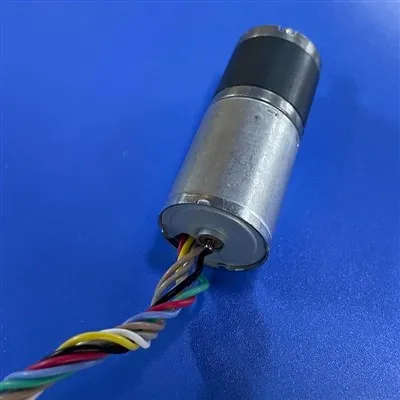
First, let’s keep it simple for anyone who’s not a gear nerd: a cycloidal gear motor isn’t your average gear setup. Unlike spur gears that grind against each other in a straight line, cycloidal ones use these weird, curved “cycloid” discs (think the path a dot makes when you roll a circle around another circle) that mesh with pins — way more teeth in contact at once, so they handle way more torque without wearing out fast. That’s their superpower: compact size, insane torque, and durability that outlasts most other gear types in rough conditions. No, they’re not perfect, but where they’re used, they’re non-negotiable.
Let’s start with the stuff most people interact with daily but never think about. If you’ve ever grabbed a soda can from a grocery store shelf, or watched a bag of chips get loaded onto a delivery truck, that was probably a cycloidal gear motor at work in a conveyor system. Not just any conveyor, either — the heavy-duty ones that haul pallets full of boxes, not the tiny one for your desk snack. I’ve supplied these to a mid-sized beverage distributor last year; they swapped out old spur gear motors on their pallet conveyors because those kept seizing up under the weight of 12 full cases of water. The cycloidal ones? Ran 18 hours a day, 6 days a week, for 8 months straight with zero downtime. Why? Because their torque is delivered smoothly, no jerky starts that strain the whole system. And they fit into the tight space under the conveyor frame that old motors couldn’t — everyone’s always complaining about installation headaches, and cycloids solve half of that.
Next up, construction and heavy machinery — this is where cycloids built their reputation, and for good reason. Ever used a concrete mixer? The drum that spins non-stop to keep cement from setting? Most of those run on cycloidal gear motors. Mixers need constant, reliable torque, often in dusty, wet, cold conditions — think a job site in winter where the battery’s dead and the motor’s left out in the rain. I’ve had a customer who runs a fleet of 40+ portable concrete mixers; last winter, their old competitor-brand gear motors were dying left and right from moisture seeping in. We swapped them to sealed cycloidal units, and they haven’t had to replace a single one in 14 months. It’s not just mixers, either: excavator attachment drives, like the augers that drill post holes for fences or foundation posts, use cycloids too. Those augers have to twist through rock and clay, and cycloids deliver that burst of high torque without burning out every time the bit hits a rock. I once got a late-night call from a guy who was drilling 50 fence posts for a farm; his regular gear motor gave out, we rushed a cycloidal unit out at 2 a.m., and he finished the job by noon the next day. That’s the real-world impact, not just specs on a sheet.
Now, let’s get into the industrial automation space — the stuff that makes factories run like clockwork, literally. Robotic arms aren’t just for car factories anymore; they’re in everything from packaging to electronics assembly. The joints on those arms need precise, consistent movement, and enough torque to lift a circuit board without trembling, but also fit into the tiny space of the arm. Cycloidal gear motors (often called “cyclo drives” in the automation world) are perfect here because their gear ratio is super high in a small package. I work with a small electronics assembly shop that builds phone cameras; their tiny pick-and-place robots use cycloidal gear motors for the arm joints. Before that, they used servo motors that were twice as big and cost 30% more, and still had backlash (that tiny slip of movement that makes parts misalign) — not a big deal for bigger parts, but a disaster for a camera lens. The cycloids eliminate almost all backlash, so they’re way more accurate, and they hold up when the robot runs 24/7. It’s not just robots, either: industrial doors, like those big roll-up doors at warehouses or cold storage, use them too. Cold storage is a brutal environment — freezing temperatures, moisture, constant opening and closing — and cycloidal motors don’t mind the cold nearly as much as other gear types.
Wait, let’s not sleep on material handling equipment, especially cranes and hoists. Any overhead crane in a factory or shipping yard needs to lift tons of weight, often at low speeds, with precise control. Hoist motors have to hold a load in place too — if the power cuts out, you don’t want the load to drop. Cycloidal gear motors have a built-in self-locking feature (thanks to the gear ratio design) that makes them perfect for that. A shipping yard customer of mine had an issue: their overhead hoists were dropping 10-ton shipping containers a tiny bit when they stopped, because the old gear motors couldn’t hold the load steadily. We installed cycloidal hoist motors, and now when they stop, the load stays exactly where it is, no drift. That’s not just a convenience — it’s a safety thing. I’ve seen too many near-misses from load drift, so that self-locking feature is a big deal.
Let’s also talk about something a lot of people don’t consider: agricultural equipment. Farmers are some of the hardest on machinery, and they can’t afford downtime during planting or harvest season. Combine harvesters, grain augers, and even the small equipment like seed spreaders use cycloidal gear motors. Last harvest, a farmer I supply told me his old grain auger motor burned out right as he was finishing his corn crop — he lost a day waiting for a replacement, which cost him thousands in lost time. We sent a cycloidal unit, and it ran non-stop for 3 weeks straight through rain and dust and extreme heat. Why? Cycloids handle shock loads really well — when a rock gets sucked into an auger, the cycloidal design absorbs the impact instead of blowing a gear or seizing up. That’s make-or-break for farmers; they can’t afford to miss that window when the crops are ready.
Now, let’s be real — cycloidal gear motors aren’t for every job. If you need a super high-speed motor for a small pump, or something that needs to spin at 1,000 RPM all day, a spur or planetary gear motor might be cheaper and better. But where torque, durability, compact size, and reliability matter, they’re the best choice, hands down. And that’s why I’ve built my business around supplying them — not because they’re the flashiest, but because they solve real problems for real people, every single day.
Here’s the thing: I’ve been in this game long enough to see gear motor trends come and go. Servos get trendy, planetary motors get hyped, but cycloidal motors keep showing up because they work when everything else fails. I’ve had customers come to me after burning through 3 or 4 other motor types in a year, and walk away with a cycloidal unit that’s still running 5 years later. That’s the kind of value I care about, not just slapping a part on a shelf and moving on.
If you’re someone who’s dealing with equipment downtime, looking to upgrade old motors, or just curious why a certain machine won’t hold up, hit me up. I don’t do sales pitches that sound like a robot — I’ll ask you about your application, your environment, how many hours a day the machine runs, and give you a straight answer on whether a cycloidal gear motor is the right fit, or if something else would work better. No fine print, no hidden fees, just gear motor advice from someone who’s actually installed these things, not just read specs online.

So if you’re tired of motors that seize up, wear out fast, or take up too much space, or if you just want to stop dealing with unexpected downtime that kills your bottom line, reach out. I’m here to help you get the right gear motor for your needs, no B.S.
Automotive Brushless Motor References:
- Shigley’s Mechanical Engineering Design, 11th Edition, McGraw-Hill, 2020.
- Industrial Gear Motor Applications: A Practical Guide, Motion Control Association, 2022.
- Cycloidal Gear Technology Fundamentals, KHK Gears Technical Manual, 2021.
Shenzhen HengDrive Technologies Co., Ltd.
Shenzhen HengDrive Technologies Co., Ltd. is one of the most professional gear motor manufacturers and suppliers in China, specialized in providing high quality customized service. We warmly welcome you to buy the newest gear motor in stock here from our factory.
Address: Building A & F, FuNing Hi-Tech Park, XinTian Road, FuHai Street, BaoAn District, ShenZhen, GuangDong Province, China.
E-mail: Marketing001@hengdrive.com
WebSite: https://www.hengdrivemotor.com/
