Alright, let’s cut to the chase — if you’re working with roller linear guides, you know that even the tiniest bit of backlash can turn a smooth operation into a jittery mess. Backlash is that little gap where the guide roller stops moving with the carriage when you reverse direction, and for anyone who’s relied on their roller linear guides for precision work — whether you’re in CNC machining, automation, or even packaging lines — that gap is a real pain point. As a roller linear guide supplier, I’ve heard every horror story: a machine that’s off by a fraction of a millimeter because of unadjusted backlash, a batch of parts that get rejected, a client scrambling to fix a production line at 2 a.m. Today, I’m breaking down exactly how to adjust backlash, the common mistakes I see people make, and what works from decades of working with these guides. Let’s dive in. Roller Linear Guide
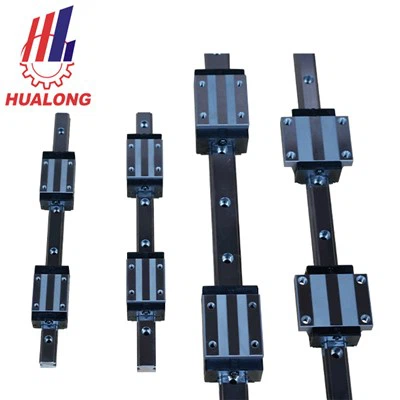
First, let’s get on the same page about what backlash actually is (no boring textbook definitions, promise). Roller linear guides are made of a carriage, a rail, and those heavy-duty rollers that roll between them, right? The backlash is the clearance between the roller, the carriage raceway, and the rail surface. Some clearance is normal for lubrication and thermal expansion (you don’t want metal parts grinding together when they heat up), but too much causes that direction-switch lag. For most industrial applications, you want that gap to be as close to zero as possible without creating too much friction or wearing out the rollers faster.
Now, before you even touch any tools, let’s talk about pre-checks. I can’t tell you how many times someone shows up to adjust backlash without basic info about their guide. First, confirm the guide model — not all roller linear guides are the same. Some have adjustable carriages, some have adjustable rails, and others are “pre-adjusted” but still have minor tweak room. I’ve seen people try to adjust a fixed-carriage guide like it’s an adjustable one, and that just leads to over-tightening and broken parts. Second, wipe everything down. Dirt or old grease in the raceway will make you think you fixed the backlash when you actually just pushed debris around. Grab a lint-free cloth and some isopropyl alcohol (or our recommended cleaner, which I won’t plug too hard but it works) and give the rail and carriage a good wipe — no shortcuts here. Third, double-check that the rail is installed straight. If the rail itself is bent or off-level, adjusting backlash won’t do jack. I always tell clients to test the rail with a dial indicator first; if it’s out of alignment by more than 0.05mm per meter, fix that alignment first before touching backlash. That’s a mistake 80% of DIYers make — they skip alignment and wonder why their adjustment doesn’t last.
Okay, now the actual adjustment part. This is where it gets specific, because different guide types have different adjustment methods. Let’s stick to the most common ones I supply: adjustable-carriage roller linear guides, which are the go-to for most small to mid-sized industrial setups. The adjustable carriage has two sets of screws — usually side lock screws and a center adjustment screw. Let’s walk through this step by step, no jargon:
- Loosen the side lock screws first. Don’t take them all the way out, just back them off 2-3 full turns. These are the ones that hold the carriage tight, so if you try to turn the adjustment screw while they’re still cranked down, you’ll strip the screw or bend the adjustment pin — I’ve done this myself once when I was new to the business, and it set me back a whole week.
- Locate the center adjustment screw (it’s usually in the middle of the carriage, marked with a little “A” or “ADJ”). This is the part that pushes the roller assembly closer to the rail, closing that backlash gap. Grab a hex key that fits perfectly — if your hex key is too small, you’ll round the screw head, and then you’re stuck with a part you can’t adjust. Pro tip: use a ball-end hex key here, it’s way easier to angle and won’t slip.
- Turn the adjustment screw slowly — like, 1/8 of a turn at a time. Don’t crank it down hard! For every type of guide, the adjustment range is super small — even a quarter turn can take you from zero backlash to too much friction. As you turn it, you’ll feel a little resistance, that’s the rollers getting pressed against the rail.
- Now test for backlash. Here’s the quick, no-equipment test if you don’t have a dial indicator: grab the carriage, push it back and forth along the rail as hard as you can. If you feel a “click” or a gap when you switch direction, you need to turn the adjustment screw a tiny bit more. If it feels tight or you hear the rollers grinding, you turned it too far — back it off 1/16 of a turn.
- Once you’ve got the backlash where you want it, tighten the side lock screws evenly. Don’t crank one all the way first — alternate between left and right, tightening each about a half turn at a time. This keeps the carriage aligned and prevents it from twisting, which would mess up your adjustment anyway.
Wait, what if you have fixed-carriage roller linear guides? Those are the ones where the carriage doesn’t have an adjustment screw, so most people think you can’t adjust backlash. Newsflash — you can, but you adjust the rail instead. The rail has mounting brackets that have slotted holes, not tight round holes. Here’s how to do that: loosen two adjacent mounting brackets on the rail, then gently push the rail closer to the carriage (or pull it, depending on where the clearance is) to close the gap. Tighten one bracket, then move to the next, keeping the rail straight as you go. Test backlash, and tweak a bracket here or there until it’s right. This is less common, but I get questions about it all the time, so it’s worth mentioning.
Now, let’s talk about the common mistakes I see, because even if you follow the steps, these will ruin your adjustment fast. First, over-adjusting for zero backlash. I know, zero backlash sounds perfect, but it’s a bad idea. Too much preload (what happens when you push the rollers too tight) increases friction, makes the guide wear out faster, and can even cause the motor to strain because it has to work harder to move the carriage. For most applications, setting backlash to 0.01mm to 0.02mm is the sweet spot — small enough to eliminate lag, big enough to keep rollers rolling smoothly. Second, not rechecking after a few days of operation. When you first adjust the guide, the rollers and raceways haven’t seated yet. After running the machine for 4-8 hours, stop and recheck the backlash — sometimes a tiny bit of settling will create a small gap. Third, forgetting to lubricate after adjustment. Backlash can actually come back faster if your guide isn’t lubricated. I always recommend using a high-quality lithium-based grease for roller linear guides; a little goes a long way, and it keeps the rollers rolling smoothly so your adjustment stays consistent.
Let’s also cover when you shouldn’t adjust backlash at all. If you’ve done all the steps, checked alignment, wiped the raceway, adjusted the screws, and you still have a lot of backlash, it’s probably not an adjustment issue — it’s wear. Roller linear guides don’t last forever; if your rollers are worn down or the raceway has grooves from years of use, adjusting the backlash won’t fix that. That’s when you need to replace the guide, not tweak it. I see this with old machines all the time — people waste hours adjusting a worn guide instead of just swapping it out for a new one. Another time: if your application is something that doesn’t need high precision, like a simple conveyor belt for heavy boxes. Backlash of a few millimeters isn’t going to hurt anyone there, so no need to adjust.
Wait, let’s throw in a quick real example, because that’s how I learn. Last year, a client from a local packaging company hit me up in a panic. Their line was making cardboard boxes, and they were getting a lot of misaligned boxes because the roller linear guides on their cutting head had backlash. They tried adjusting it themselves, but it was worse — their cutting head was jittery, and they were losing 10 boxes a minute. I went out to their plant, checked alignment first (it was off by 0.1mm per meter, which was way too much), fixed that, then adjusted the backlash to 0.015mm. The problem was gone, and they didn’t have to replace the guide. Later, they told me that mistake was because they skipped the alignment step. That’s exactly why I harp on that.
Now, for the care and maintenance part, because adjusting backlash isn’t a one-and-done thing. I tell all my clients that checking backlash every 3-6 months is a good rule of thumb, especially if their machine runs 24/7. Also, keep the area around the rail clean — chips, dust, and debris will get in the raceway and cause wear, which leads to backlash. If you see any rust on the rail, wipe it off immediately and re-grease, because rust will mess up the roller surface and create clearance.
At the end of the day, adjusting backlash on a roller linear guide isn’t rocket science, but it’s something that requires attention to detail and not rushing through the steps. I’ve seen too many people mess it up because they skip pre-checks or over-tighten the screws. If you take your time, check alignment, adjust in tiny increments, and recheck after a few runs, you’ll get that smooth, precise movement you need.

If you’re dealing with persistent backlash, or if you need help picking the right roller linear guide for your application, don’t hesitate to reach out to our team. We’ve worked with everyone from small shop owners to big manufacturing plants, and we’re here to help you get your machine running like it should. Whether you need a quick adjustment tip, a replacement part, or a whole new guide, we’ve got you covered.
References
Ball Square Linear Guide Roller Linear Guide Technology and Design, Industrial Press Inc.
Maintenance Guidelines for Linear Motion Systems, Motion System Design Magazine, 2022.
Backlash Compensation in Linear Roller Guides, ASME Journal of Manufacturing Science and Engineering, Vol. 141, No. 5, 2019.
Fujian Province Hualong Machinery Co., Ltd.
As one of the leading roller linear guide manufacturers and suppliers in China, our products have good reputation in the market. Please rest assured to wholesale bulk roller linear guide made in China here from our factory. Welcome to view our website for more information.
Address: Huangshi Industrial Park, Putian city, Fujian Province, China
E-mail: jenkin@hualongm.com
WebSite: https://www.guidelinear.com/
