Hey there, if you’ve ever waited by an elevator, shuffled inside to grab that last spot, and felt that lurch or heard a beep that wouldn’t quit—you already know overloading sucks. It’s that split second where you realize you’re one person too many, or someone’s backpack is crammed with way more than it should be, and suddenly the elevator’s like “nope, not happening.” Now, I run a small machine room less (MRL) elevator supply company, so I get asked this question all the time: how do these space-saving, no-roof-equipment elevators actually handle overloading way differently than the old, clunky ones with big machine rooms? Let’s break this down like we’re chatting over coffee, no engineering jargon that’ll make your eyes glaze over. Machine Room Less Elevators
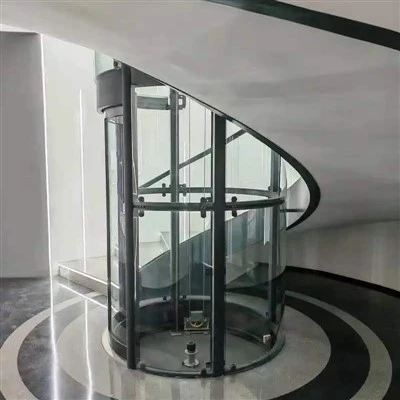
First, let’s get one thing straight: MRL elevators don’t have a giant motor or control panel hidden in a penthouse room—they tuck all that stuff right into the shaft, which is why building owners love ’em (extra floor space for offices or apartments, no weird roof structural work). But that tight spot means their overloading system isn’t just a bigger version of the old ones. The key here is load sensors, and before you go “sensors, boring,” hear me out. The old elevators with machine rooms used a big, spring-loaded thing somewhere near the motor that would trigger a switch if the weight was too high. MRLs? They’ve got tiny, super precise load cells installed in way more places—usually the corners of the elevator cabin’s undercarriage, sometimes even mounted between the car frame and the actual floor of the cabin. No spring, just a solid little sensor that crunches numbers in real time.
Wait, let’s make that real. When someone steps into the elevator, each load cell sends a tiny electrical signal based on how much weight is pressing down. Add up all four, and that’s the total load. If it’s under the rated capacity (say, 2,000 lbs for a standard passenger MRL), everything’s smooth—doors close, elevator moves. Hit that limit, and the sensors send a signal to the main control unit (the brain tucked in the shaft). What happens next? No snarky human yelling “too many people!” The doors just won’t close. Not like they get partway and stop—they stay wide open, and you hear that consistent beep-beep-beep that’s impossible to ignore. It’s not going anywhere until you step out, or until someone rearranges their stuff, or until the next person decides to wait. No forcing the cabin to move, which is a huge safety win, especially in tight commercial buildings.
But here’s where it gets clever, and something a lot of my customers don’t realize: MRL elevators have what’s called “load profiling” built in. Wait, that sounds fancy, but it’s just the control unit learning the normal weight of the cabin itself. Like, when the elevator’s empty, the sensors baseline that number—so if there’s a little extra weight (say, two people, or a bunch of shopping bags), it doesn’t trigger a false overload. Old machine room elevators sometimes had that problem: if a big maintenance tool was left in the cabin, it’d think 1,900 lbs was overload, which was annoying. MRLs are way better at that because the load cells are so precise—they can tell the difference between the cabin’s weight, people, and random stuff without getting tripped up. I’ve had a client tell me their old building’s machine room elevator would false-overload all the time because of a loose metal plate on the cabin floor. When we swapped it out for an MRL, that problem vanished. Score one for small shafts.
Now, what if someone does try to cram way too much in? Like, moving a couch in a residential MRL, or a pallet of boxes in a small commercial one? The system doesn’t just stop the doors—it will even send a little signal to the building’s security panel if it detects a load way above the rated limit, like 125% or more. That’s not overkill—those MRL components aren’t built to handle extra strain. The motor in an MRL is smaller, lighter, designed specifically for the shaft, so if you force it to move 3,000 lbs when it’s rated for 2,000, you’re gonna wear out parts way faster, maybe even break something. I’ve seen that happen with people who skip overloading rules just to get their stuff from the lobby to the 3rd floor—call me when you need to replace a shaft-mounted control unit, yeah?
Wait, let’s talk about a common myth I hear all the time: “MRL elevators don’t have emergency brakes, so if they overload, they crash.” No way. The overloading system is layered, not just one sensor. There’s the cabin-under-frame sensors, then there’s a secondary safety switch that’s triggered if the car tilts even a tiny bit because the weight’s off-balance. Like, if three people stand on one side of the cabin and it dips, that switch will kick in too, not just the load sensors. Old machine room elevators had that too, but in MRLs, it’s tucked right into the cabin’s frame, so no extra parts in the shaft. That’s another reason they’re more reliable for overloads—redundancy, but not the bulky kind.
Let me give you a recent example from a client of mine. It’s a 6-story apartment building in downtown Austin, we installed 4 MRL passenger elevators last year. About two months ago, a maintenance guy was moving a new fridge into a unit on the 4th floor. He tried to fit the fridge in—wait, the rated capacity is 2,500 lbs, the fridge was like 3,000. The elevator beeped nonstop, doors wouldn’t close. He thought it was glitching, so he pushed the close button 10 times, even hit the “override” button (which a lot of people don’t know is only for emergencies, not for cramming stuff). When it still wouldn’t move, he called me at 8 PM. I told him the system did exactly what it’s supposed to—stopped him from breaking the elevator. We sent a tech out, checked the load sensors, no damage. The override button? It’s for if, say, an old lady with a walker plus a kid plus a stroller is just a tiny bit over, and you need to let them in because there’s no next elevator for 10 minutes. But it’s not a free pass—most MRLs limit override to 10% over capacity, max. That’s not arbitrary, that’s what the components can handle without wearing out.
Another thing: MRLs handle overloading differently than freight elevators, obviously. My company does both passenger and light freight MRLs, right? Passenger ones have super sensitive load sensors that can tell if one person is leaning on the wall to make more space. Freight MRLs are a bit more forgiving, but only up to their rated weight—no way we’d sell a freight elevator that can take 5,000 lbs if it’s gonna let you put 6,000 in. The load cells on freight models are bigger, sturdier, because they’re built for pallets, not backpacks full of books.
Wait, let’s get into the tech basics without the fluff. Most MRL overloading systems use strain gauge load cells. A strain gauge is a tiny piece of material that changes its electrical resistance when it’s bent or stretched. When you put weight on the elevator cabin, the load cells bend a little, the resistance changes, and the control unit translates that into pounds (or kilograms, depending on where you are). That’s way more precise than the old magnetic switches or spring-loaded cams in machine room elevators. For anyone who’s ever wondered why MRLs seem to get overloads when they have a mix of people and bags, that’s because the strain gauges pick up every little bit of weight, not just the big, obvious stuff.
Is there a downside to MRL overloading systems? Maybe the beeping is a little louder than old elevators, but that’s a small trade-off for not having a giant motor in your roof. No, seriously—customers always complain that the beep is too loud, but then they realize they never have to call a tech because a spring broke in the old machine room elevator anymore. I’d take a loud beep over a $5,000 repair bill any day.
Now, let’s address the thing everyone actually cares about: safety. The number one rule for elevators, MRL or not, is “no overload.” But MRLs don’t cut corners here. The load sensors are calibrated every six months, same as any other elevator part—we tell all our clients that, because if you skip calibration, the sensors get off, and you might get a false overload or a missed overload. I had a client in Dallas who skipped the calibration once, and the load cells thought the cabin was empty when it was 300 lbs over. That’s dangerous. So part of our service as an MRL supplier is helping clients set up regular calibration checks, so their overloading system works like it’s supposed to.
Wait, I mentioned earlier that MRLs don’t have a machine room—so all the overload logic is in the control unit, which is in the shaft. That means there’s no single point of failure in the machine room, which was a weak spot for old elevators. If that big spring in the machine room broke, the overload system didn’t work. If the cam got sticky, it’d trigger false overloads. In MRLs, the load cells are spread out, so if one has a tiny issue, the other three still work. Redundancy that’s hidden, which is perfect for buildings that don’t want extra equipment taking up space.
Let’s wrap this up with something practical. If you’re building a new commercial space or renovating an old one and thinking about MRL elevators, don’t sleep on the overloading system. We’ve tested ours over and over—we load test every unit before it leaves our warehouse, up to 110% of rated capacity, to make sure the doors stay open, no movement, no damage. That’s non-negotiable for us. Old machine room elevators could handle more, but they’re bigger, more expensive to install. MRLs are the sweet spot for most buildings, as long as the overloading system is set up right.
If you’ve been dealing with wonky overloads on your current elevators, or you’re ready to upgrade to MRLs and want to ask more about how their overloading works, hit us up to connect for a purchasing chat. We can walk through specs, give real examples from buildings like yours, no pressure, just straight answers about how these elevators keep things safe without taking up a ton of space.
Residential Elevators References:
- Elevator World. (2021). Load Sensing Technology in Machine Room-Less Elevators. Vertical Transportation Magazine.
- American Society of Mechanical Engineers (ASME). (2022). Safety Code for Elevators and Escalators (ASME A17.1). Chapter 8: Passenger Elevator Safety Systems.
- National Elevator Industry, Inc. (NEII). (2020). Machine Room-Less Elevator Installation and Performance Guidelines. Technical Bulletin MRL-001.
Ningbo Dongao Elevator Co., Ltd.
As one of the most experienced machine room less elevators manufacturers and suppliers in China, we also support customized service. We warmly welcome you to buy high quality machine room less elevators for sale here from our factory. For quotation, contact us now.
Address: No. 16 Xiapan Road, Ninghai County, Ningbo City, Zhejiang Province
E-mail: 13777289058@163.com
WebSite: https://www.daelevator.com/
