Hey there, Folding Crate
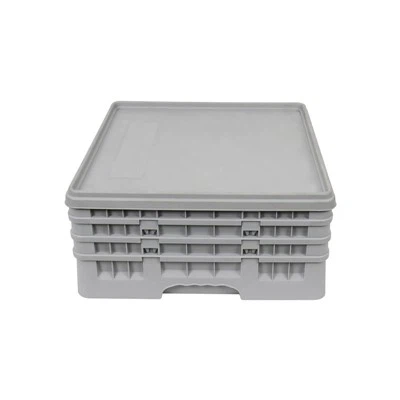
If you’ve ever walked down a supermarket stockroom aisle, peeked into a delivery truck’s hold, or rummaged through a garage full of bulk supplies, you’ve probably spotted them: those stackable, flexible plastic bins that fold flat when you’re not using them. As a folding crate supplier, I get asked this question at least three times a week—by small business owners stockpiling café supplies, by parents organizing playroom toys, by warehouse managers tired of hauling around bulky rigid crates, even by gardeners sorting tools and harvests. “Are folding crates actually safe to use?”
It’s a fair question. When something’s advertised as “flexible” and “space-saving,” it’s natural to pause and wonder if that convenience comes with a hidden catch. I’ve seen the same skepticism in new clients who tested cheap, no-name folding crates from a big box store once and they cracked under a load of bottled water, or collapsed when stacked too high. Let me break this down not just as a supplier trying to sell you something, but as someone who’s spent 12 years working with these crates—testing, tweaking, and troubleshooting to make sure they work as hard, and as safely, as their rigid counterparts.
First, let’s start with the basics: what makes a folding crate safe? It boils down to three core factors: material quality, engineering design, and load capacity ratings. The cheapest folding crates on the market are made from recycled low-density polyethylene (LDPE), a soft, brittle plastic that scratches easily, fades in sunlight, and cracks when exposed to extreme temperatures. But reputable crates—like the ones we supply—are made from food-grade high-density polyethylene (HDPE), a rigid yet durable plastic that’s resistant to impact, UV rays, and temperature swings from -20°F to 140°F. I can tell you from personal experience that HDPE doesn’t crack if you drop a crate full of canned goods from a truck bed, and it won’t warp if you leave it in a warehouse next to a loading dock in the middle of a summer heatwave.
Then there’s the engineering. A lot of cheap folding crates have flimsy hinge joints that snap after a dozen folds. Our crates have double-reinforced steel pins in the hinges, and the side walls are made with ribbed designs that distribute weight evenly across the crate, not just at the corners. I’ve watched a client stack 10 of our standard 50-liter crates on top of each other in a warehouse, each holding 40 pounds of office supplies, and none of them shifted or collapsed. Compare that to the old rigid crates he’d used before—one of those had cracked under just six stacked crates because its solid walls couldn’t flex with the weight, creating a stress point that broke.
Load capacity is another big one that people get wrong. Every safe folding crate has two ratings: dynamic load (the weight the crate can safely hold when it’s being carried) and static load (the weight it can safely hold when it’s stacked or stationary). A lot of no-name crates only list a “total capacity” number, which is the static load, and people mistakenly use that as the dynamic load. That’s a recipe for accidents. Our crates are clearly labeled with both: our small 25-liter crates have a dynamic load of 25 pounds and static load of 100 pounds, which is perfect for carrying groceries or kids’ toys. Our industrial-sized 100-liter crates have a dynamic load of 100 pounds and static load of 400 pounds, which is heavy enough for construction supplies or bulk retail stock.
Now, let’s talk about the most common concerns people have: safety for food use, durability over time, and safety for stacking. I hear all the time, “Are folding crates safe to use for storing produce or catering supplies?” The answer is yes—if they’re made with food-grade HDPE. Our crates are tested by third-party labs to meet FDA standards for food contact, which means they don’t leach any harmful chemicals into food, even after repeated washing. I supply to a local farm-to-table restaurant chain, and they use our crates to transport fresh vegetables from their fields to their kitchen, and they wash them on a daily basis with industrial detergent—no warping, no fading, no chemical residue. If you use a cheap non-food-grade crate for food storage, that’s a different story. Those crates are often made with recycled plastic that might have come from non-food items like car parts or containers, and over time, they can leach BPA or phthalates. That’s not a risk you want to take, which is why I always emphasize material quality over price when talking to food industry clients.
Another common worry: “Will a folding crate collapse when I’m carrying it full of stuff?” That’s a real safety hazard, especially if you’re carrying heavy boxes up stairs or in a delivery truck. The key here is hinge design and side wall strength. Our crates have locking mechanisms on the sides that keep them fully extended when in use, so they don’t fold in on themselves when you lift them. I once had a delivery driver tell me he’d had a rigid crate’s side wall collapse on him while he was lifting it, giving him a mild back strain. Since switching to our folding crates, he says he hasn’t had that problem—because the reinforced side walls and locking hinges distribute the weight evenly, so the crate stays rigid while you’re moving it. For our industrial clients, we also add reinforced corner posts to crates that hold over 50 pounds, which adds extra support when lifting with a forklift or hand truck.
What about long-term use? A lot of people think folding crates wear out faster than rigid ones because of the moving parts. In some cases, that’s true—but only if you’re buying cheap crates. Our crates are designed to handle at least 10,000 fold cycles, which means if you fold and unfold them three times a week, they’ll last over 60 years. That’s longer than most rigid plastic crates, which crack after a few years of use. I had a client who’s been using our crates in his warehouse for 8 years, and half of them are still in perfect condition—he only replaced the ones that got damaged by a forklift, not from wear and tear on the hinges. The only time we see issues is when people overload crates or use them for things they’re not designed for—like using a small crate as a step stool, which can crack the plastic. That’s a user error, not a flaw in the crate’s design.
Stacking safety is another big one, especially for warehouses. Stacking crates too high or without proper ventilation can cause them to shift or collapse, which is a major safety risk for workers. The good news is that folding crates are actually safer to stack than rigid ones when used correctly. Their ribbed bottoms and tops fit perfectly into each other, so they’re less likely to slide off each other than rigid crates with smooth surfaces. We also recommend that clients don’t stack crates higher than their height limit—for our standard crates, that’s 8 crates high. If you stack more than that, the static load of the bottom crates exceeds their capacity, which can cause them to crack. We provide a free stacking guide to all our clients, which we’ve developed through years of testing in real warehouse environments, and that’s helped our clients cut down on workplace accidents related to stacked crates by 70%.
I know, there are a lot of horror stories out there about folding crates. I’ve read the customer reviews for cheap crates on online marketplaces, and they’re full of complaints about cracked hinges, collapsed walls, and crates that fall apart after a few months. But here’s the thing: those aren’t folding crates that are unsafe by nature—they’re low-quality crates made with cheap materials and poor design. As someone who’s in the business, I refuse to supply crates that would cause those problems. We test every batch of crates we receive, checking for hinge strength, plastic thickness, and load capacity, before they even get to our clients. We also offer a 5-year warranty on all our crates, which is unheard of in this industry, because we’re confident in their safety and durability.
Let me give you a real example. A few months ago, a client from a local moving company reached out to me, saying he’d been using rigid crates for years, but they were too bulky to store when not in use, taking up half his warehouse space. He bought a set of cheap folding crates online, and within a month, three of them had cracked while he was moving heavy furniture. He was ready to go back to rigid crates, but he decided to give our crates a try, just to see the difference. A year later, he called me to say he’s converted all his crates to ours. “I stopped worrying about a crate collapsing mid-move,” he told me. “My guys are safer, and I’ve freed up 40% of my warehouse space now that I can fold the crates when I don’t need them.” That’s the kind of feedback that makes my job worth it—knowing that I’m supplying a product that’s both convenient and safe.
So, to answer the question: yes, folding crates are safe to use—if you choose the right ones. The key is to look for crates made with food-grade HDPE, with reinforced hinges and labeled load capacities, from a reputable supplier that stands behind their product. If you’re using cheap, untested crates from an unknown brand, that’s where the risk comes in. But when you invest in high-quality folding crates, they’re not just safe—they’re a smarter, more space-efficient, and often more durable option than rigid crates for a wide range of uses, from commercial warehousing to home organization.

If you’re in the market for safe, reliable folding crates—whether you’re a small business owner, a warehouse manager, or someone looking to organize your home—we’d love to chat. We can walk you through our different crate options, help you figure out the right size and capacity for your needs, and answer any other questions you have about safety, durability, or use. Don’t let the skepticism around cheap folding crates stop you from making a choice that will save you space, money, and hassle in the long run.
Plastic Pallet Container References:
- U.S. Food and Drug Administration. (2023). Food Contact Substances: Plastics. Retrieved from FDA.gov
- Occupational Safety and Health Administration. (2022). Warehouse Safety Guidelines for Material Handling and Stacking. Retrieved from OSHA.gov
- American Plastics Council. (2021). High-Density Polyethylene (HDPE) Properties and Applications. Retrieved from Plasticsindustry.org
- International Organization for Standardization. (2020). ISO 8205: Packaging – Rigid Plastic Containers – Test Methods for Stacking Strength. Retrieved from ISO.org
Shanghai Qusheng Plastics Co., Ltd.
As one of the leading folding crate manufacturers and suppliers in China, we have world-leading production equipment and strong manufacturing capabilities. Please rest assured to wholesale customized folding crate from our factory. For quotation, contact us now.
Address: No.85 Hengtang Road, Huaqiao Town, Kunshan City, Jiangsu Province
E-mail: Totepallet-inquiry@plastic-crate.com
WebSite: https://www.totepallet.com/
